Tree Roots in a Sewer Line in Trenton, NJ
Tree roots in a sewer line are roots that have grown into an underground sewer lateral through a joint or a crack, and grown into a mat inside the pipe that catches everything passing through. They are one of the most common causes of recurring drain problems in Trenton, because the city's older neighbourhoods have both old clay laterals with many joints and mature street trees. This page explains how roots get in, the signs, and the choices for dealing with them.
Drain and sewer assistance for homes, rentals, and local properties in Trenton, NJ.
Calls may be routed to an independent local service provider.
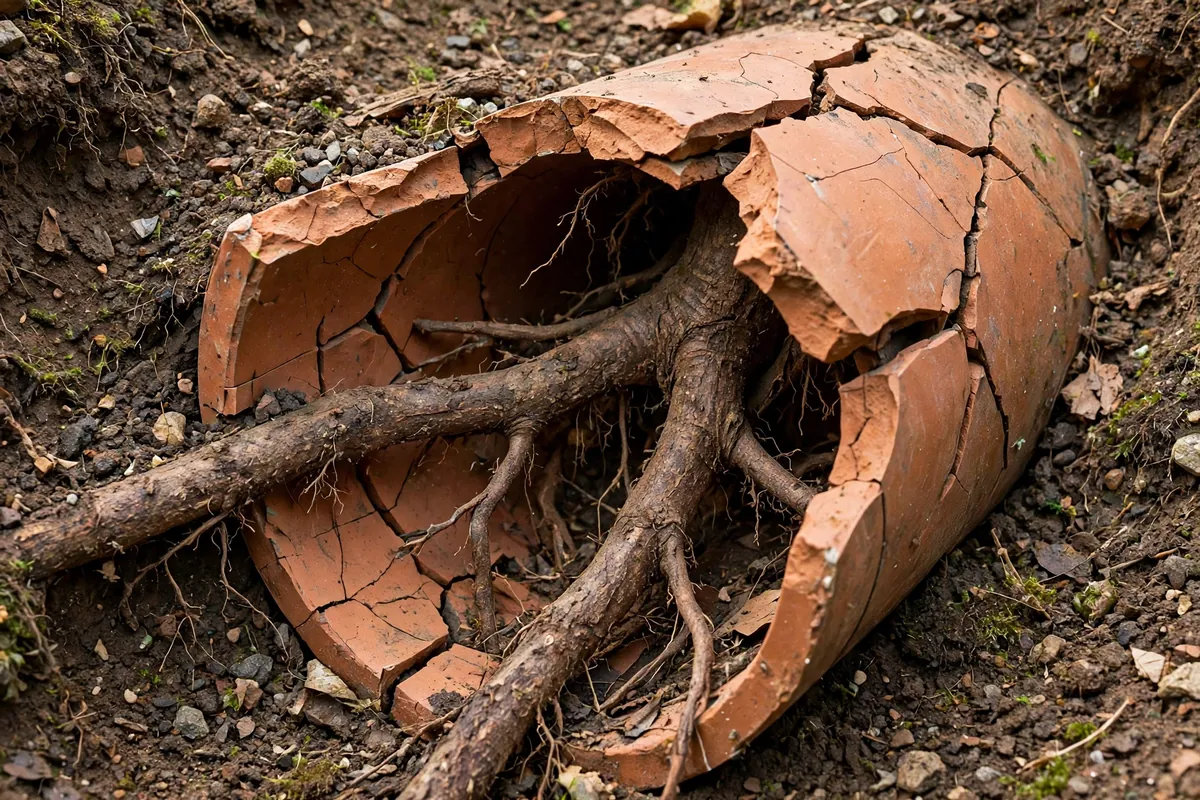
Tree roots growing into a broken clay sewer pipe.
Key Takeaways
- Roots enter older clay and cast-iron laterals through joints and cracks, looking for water.
- A root mat catches paper, grease and debris, so the drain slows a little more each year.
- Root cutting clears the mat, but the joint is still open, so roots return unless the pipe is repaired or lined.
- A camera inspection shows how many joints the roots affect, which decides the right answer.
- Only a camera can confirm roots and show how much of the line they affect.
- A drain that clogs every few months in a house with large trees nearby is usually a root problem.
How Tree Roots Get Into a Sewer Line
A tree sends roots out in search of water, and a sewer lateral is a reliable source of it. The roots grow through the soil toward the moisture that escapes from a pipe, and they find the weakest point in the pipe wall: a mortar joint in a clay lateral, a crack in an old pipe, or a joint that has shifted as the ground moved. A fine root, thinner than a thread, enters through a hairline gap, and once inside it finds a steady supply of water and nutrients. It grows, thickens, and sends out more roots, until a mat has formed inside the pipe that catches paper, grease and everything else that passes. The process is slow, taking seasons rather than weeks, which is why a drain problem caused by roots usually appears gradually, with the drain slowing a little more each year.
Clay pipe is the most vulnerable material, because it was laid in short sections, two or three feet long, joined with mortar, and a single run to the street can have dozens of joints. Every joint is a potential entry point, and the mortar itself weakens with age, shrinking and cracking as it dries out. Cast iron is less vulnerable at the joints, because it was made in longer lengths, but it corrodes from the inside, and a corroded section can develop a crack that a root can enter. Orangeburg pipe, used in homes built from the 1940s into the early 1970s, is a fibre pipe that softens and deforms as it ages, and a deformed section can develop gaps that roots exploit. Plastic pipe, the standard for new work from the late 1970s onward, has solvent-welded joints that are far harder for roots to enter, which is one reason a newer home is less likely to have a root problem.
The trees that cause the problem are usually the mature street trees that make Trenton's older neighbourhoods attractive. A large maple, oak or sycamore has a root system that spreads far beyond its canopy, and it can reach a sewer line from a considerable distance. The roots do not need to be under the tree itself: they grow toward water, and a lateral is a line of water running through the soil. A tree in a neighbour's yard, or a street tree on the far side of the sidewalk, can send roots into a lateral just as easily as a tree in the homeowner's own front lawn. That is why the question to ask is not whether there is a tree over the line, but whether there are large trees anywhere near the line, and a camera inspection report that records the distance to each root entry can show which tree is the source.
Roots do not damage a sound pipe on their own. They enter through a weakness that is already there: a joint that has opened, a crack that has formed, or a section that has shifted. That distinction matters, because it means the root problem and the pipe problem are the same problem. Cutting the roots clears the pipe, but the weakness is still there, and the roots will return. Repairing the pipe, by lining it or replacing it, closes the weakness, and the roots cannot re-enter. The discussion about roots is therefore a discussion about the pipe, and the camera inspection is the step that shows both.
Signs of Tree Roots in a Sewer Line
- Drains slow gradually over months, rather than blocking suddenly.
- The same drain clogs every few weeks or months, even after it has been cleared.
- A toilet gurgles or bubbles when another fixture is used.
- A tub or floor drain is slow, especially on the lowest floor of the house.
- The house has large trees near the sewer line, or a mature street tree over the line.
- A camera inspection shows a fibrous mat growing through a joint or a crack.
- The problem is worse in the growing season, when roots grow fastest.
- A previous root cutting lasted only a few months before the drain slowed again.
Root Cutting, Jetting and Repair Compared
| Approach | What it does | How long it lasts | When it fits |
|---|---|---|---|
| Root cutting with a cable machine | A rotating cable with a cutting head cuts the root mat out of the pipe. | Months to a year, because the joint is still open. | A first root problem, or a line that needs to be opened before jetting or inspection. |
| Root cutting plus hydro jetting | Cutting removes the mat, jetting washes the cut material and buildup out. | Longer than cutting alone, because the pipe walls are clean. | A line with both roots and grease or scale buildup. |
| Pipe lining | A new, jointless pipe is formed inside the old one, sealing every joint. | A lasting fix, because there are no joints for roots to enter. | Roots entering through many joints along the line. |
| Pipe bursting | A new pipe is pulled through as the old pipe is broken apart. | A lasting fix, with a new pipe in place of the old one. | A line that is collapsed or too damaged to line. |
| Spot repair | The damaged section is excavated and replaced at one point. | A lasting fix for that one joint. | Roots entering through a single joint or a short damaged length. |
| Removing the tree | Removes the source of the roots. | Stops new roots from that tree, but does not fix the open joint. | Rarely the whole answer on its own, and not always practical or permitted. |
What Happens When Roots Are Found
Camera inspection
A camera is pushed through the line to confirm the roots, show how dense the mat is, and record the distance to each root entry. The inspection shows whether roots are entering through one joint or through many.
Cut the roots
A cable machine with a cutting head is fed through the cleanout to cut the root mat out of the pipe. The cable is worked back and forth until water flows through the line again.
Jet the line clean
Hydro jetting washes the cut roots and the buildup behind them out of the line, so the pipe is clean rather than just open, and a camera is run again to show the condition of the pipe.
Discuss the lasting fix
The local professional talks through the choices that fit the line: regular cutting, a spot repair, a lining, or pipe bursting, including what each one involves and how much digging it needs.
Why Roots Keep Coming Back
Roots return because the joint they entered through is still open. Root cutting removes the mat inside the pipe, but it does not close the gap in the pipe wall, and a root that has been cut will regrow from the same point, often thicker than before, because the cutting stimulates new growth. The interval between cuttings gets shorter each time, which is the sign that the pipe, not the roots, is the problem. A line that needs root cutting every few months is a line that needs repair, and the discussion should be about the pipe, not about the next cutting.
The number of joints matters. A clay lateral with roots entering through one joint can sometimes be fixed with a spot repair at that one point, or with a short lining over that section. A clay lateral with roots entering through a dozen joints along its whole length is a different case: a dozen spot repairs would mean digging up the whole front lawn, and a single lining that seals all the joints at once is usually the better answer. A camera inspection shows the number of entries and the distance to each one, so the choice can be made on evidence rather than on a guess. The trenchless sewer repair page explains lining and bursting in detail.
Removing the tree is rarely the whole answer, and it is often not practical. A street tree belongs to the municipality, not the homeowner, and it cannot be removed without permission. A tree in a neighbour's yard is not the homeowner's to remove. And even if the tree is removed, the joint is still open, and roots from another tree, or from the stump, can enter through the same gap. Removing a tree can be part of the answer, when the tree is the homeowner's and it is directly over the line, but it should be discussed with the provider and with the municipality where a street tree is involved, and it does not replace repairing the pipe.
There are products sold to kill roots in a sewer line, usually copper sulfate or a foaming root killer, and they are worth a word of caution. They can kill the roots inside the pipe, but they do not close the joint, they can damage the pipe and the soil around it, and they can harm the treatment system downstream. They are not a substitute for cutting and repair, and they should not be used without discussing them with the local professional, who can explain whether they are appropriate for the particular line and whether they are permitted in the area. The safest approach is the mechanical one: cut the roots, inspect the pipe, and repair the joints that let them in.
Tree Roots in Trenton's Older Neighbourhoods
Trenton's older neighbourhoods are where root problems are most common, because they have both the old pipe and the mature trees. Chambersburg, with homes dating to the late nineteenth and early twentieth centuries, has clay laterals with dozens of joints and mature street trees that have had a century to grow. Hiltonia and North Trenton have a similar mix of early twentieth century homes and large trees. The laterals under those homes are often as old as the houses themselves, laid when the houses were built and never replaced since, and the roots have had decades to find the joints. A drain that clogs every few months in one of those neighbourhoods is usually a root problem, and a camera inspection is the step that shows how many joints are affected.
The pattern is worth noting for a buyer as well. A home in an older Trenton neighbourhood with large trees over the front lawn is more likely to have a root problem than a home on a newer street with small trees, and a camera inspection before purchase is the way to know whether the lateral is affected. A general home inspection does not usually cover a buried sewer lateral, so the camera is the only way to see the roots before they cause a backup after the sale. The video sewer inspection page explains what the inspection shows and what a good report should contain, and the sewer line repair page explains the choices once the roots are confirmed.
Call for Tree Root Help in Trenton
A drain that keeps clogging in a Trenton home with large trees nearby? Call now to describe the problem and connect with an independent local drain professional who can discuss a camera inspection and the choices for dealing with roots.
Trenton Drain Pros is a referral service connecting callers with an independent local service provider; the provider is responsible for diagnosis, pricing, scheduling, licensing and the work performed.
Frequently Asked Questions
How do tree roots get into a sewer line?
Roots grow through the soil toward the water in a sewer lateral, and they enter through the weakest point in the pipe wall: a mortar joint in a clay lateral, a crack in an old pipe, or a joint that has shifted. A fine root enters through a hairline gap, finds water and nutrients inside the pipe, and grows into a mat that catches everything passing through.
What are the signs of roots in a sewer line?
The usual signs are drains that slow gradually over months, clogs that return every few weeks or months, a toilet that gurgles when another fixture runs, and a house with large trees near the sewer line. Roots are confirmed only by a camera inspection, which shows the mat and how many joints it affects.
Will cutting roots out of my sewer line fix the problem?
Cutting clears the pipe, but it does not close the joint the roots entered through, so roots will return, often thicker than before. A line that needs cutting every few months needs repair: a spot repair for one joint, a lining for many joints, or pipe bursting for a badly damaged line. A camera inspection shows which one fits.
Can hydro jetting remove tree roots?
Jetting alone does not remove a dense root mat. Roots are cut first with a cable machine, and jetting follows to wash the cut material and the buildup behind it out of the line. Jetting is the cleaning step after cutting, not a replacement for it.
Should I remove the tree over my sewer line?
Removing a tree can be part of the answer when the tree is yours and it is directly over the line, but it does not fix the open joint, and roots from another tree can enter through the same gap. A street tree belongs to the municipality and cannot be removed without permission. Repairing the pipe, by lining or replacement, is the lasting fix.
Do root killer chemicals work on sewer lines?
Root killer products can kill the roots inside the pipe, but they do not close the joint, they can damage the pipe and the soil around it, and they can harm the treatment system downstream. They are not a substitute for cutting and repair. Discuss them with the local professional before using them.
How can I tell if roots or grease are causing my clog?
The pattern gives a clue: a drain that slows gradually over months in a house with large trees nearby is more likely roots, while a kitchen drain that clogs after cooking is more likely grease. Only a camera inspection can confirm which one it is, because it shows the inside of the pipe directly.
Is a sewer line with roots a reason not to buy a home?
Not necessarily, but it is a reason to know the condition of the line before purchase. A camera inspection shows how many joints the roots affect and whether the pipe needs a spot repair, a lining or a replacement. That information can be discussed before the sale is completed, rather than discovered after a backup.
Need Drain Cleaning Help? Call Now
Describe the drain problem and discuss the help available for your specific situation.