Drain Cleaning in Trenton, NJ
A drain that runs slowly, gurgles, smells, or backs up is usually describing a blockage somewhere between the fixture and the street. Trenton Drain Pros connects homeowners, landlords, property managers and businesses in Trenton, New Jersey, with an independent local drain professional who can assess the problem, explain the options, and carry out the cleaning or repair. Call to describe what the drains are doing and discuss the help available for your home or property.
Drain and sewer assistance for homes, rentals, and local properties in Trenton, NJ.
Calls may be routed to an independent local service provider.
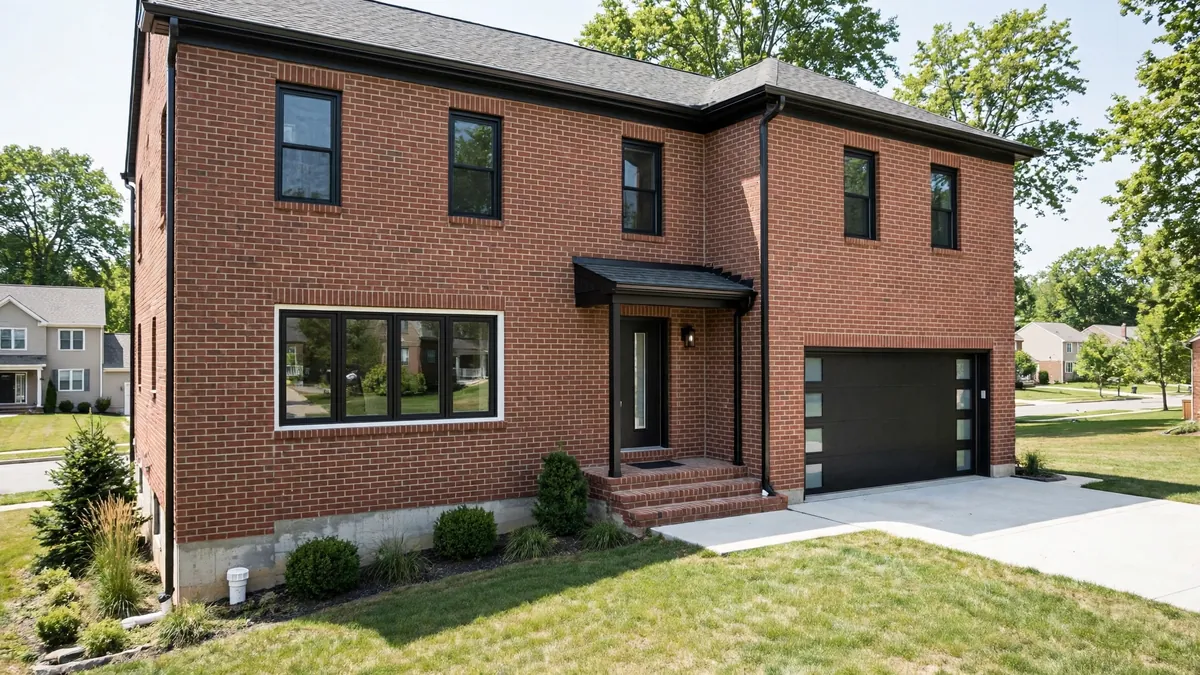
A brick home in a New Jersey neighborhood with a clean sewer cleanout area.
Key Takeaways
- A single slow drain usually points to a blockage in that fixture's own pipe. Several fixtures acting up at once usually points to the main sewer line.
- Clearing a drain opens a path through a blockage. Cleaning a drain scours the inside of the pipe, which is what stops the same clog returning within weeks.
- Tree roots, grease, wipes and broken or sagging pipe are the common causes of recurring drain problems in Trenton's older homes.
- A video camera inspection shows the cause inside the pipe instead of guessing from the symptoms at the surface.
- Sewage backing up into a home is a sanitation problem. Stop using water, keep people and pets away from the water, and call for help.
- Trenton Drain Pros is a referral service. The independent local provider who takes the call is responsible for diagnosis, pricing, scheduling, licensing and the work performed.
Drain Problems We Help With in Trenton
Clogged Drains
Kitchen, bathroom, laundry and floor drains that will not empty, drain slowly, or clog again after every use.
Learn More →Slow Drains
Sinks, tubs and showers that take a long time to empty, sometimes with gurgling or a sour smell from the drain.
Learn More →Clogged Main Sewer Line
Several fixtures slow at once, toilets bubbling, and water appearing in a tub or floor drain when another fixture is used.
Learn More →Sewer Backups
Wastewater coming back into a basement, bathroom or floor drain, including backups that follow heavy rain.
Learn More →Tree Roots in Sewer Lines
Roots that enter through joints and cracks in older clay and cast-iron laterals and catch everything that passes.
Learn More →Sewer Line Cleaning
Cleaning the main line from the house to the street main, including root cutting and high-pressure water jetting.
Learn More →
Drain Cleaning Services in Trenton, NJ
Drain Cleaning
General drain cleaning for sinks, tubs, showers, toilets, laundry drains and floor drains across Trenton homes and businesses.
Learn More →Clogged Drain Repair
Clearing stubborn and recurring clogs in fixture drains and branch lines, with the cause identified rather than guessed.
Learn More →Sewer Line Cleaning
Main line cleaning from the building to the street, including mechanical augering and root removal.
Learn More →Hydro Jetting
High-pressure water jetting that scours grease, scale and debris from the inside walls of a drain or sewer pipe.
Learn More →Sewer Line Repair
Repair of cracked, collapsed, bellied or root-damaged sewer lines, including trenchless options where the pipe allows.
Learn More →Trenchless Sewer Repair
Pipe lining and pipe bursting methods that repair or replace a sewer line with far less digging than open excavation.
Learn More →Video Sewer Inspection
A camera run through the line to show the blockage, the pipe material, cracks, roots, sags and the exact location of the problem.
Learn More →Drain Cleaning in Trenton, NJ
The main Trenton service page: local drain problems, neighbourhoods, service areas and what happens when you call.
Learn More →What Drain Cleaning Means
Drain cleaning is the work of removing a blockage from a drain or sewer pipe and restoring the pipe so water flows through it properly again. It sounds simple, and for a single clogged sink it often is. But a drain is not one pipe. It is a system that starts at each fixture, joins other branch lines inside the house, leaves the building through the main building drain, and runs underground as the sewer lateral to the public sewer main in the street. A blockage can sit in any part of that system, and where it sits decides both the symptoms you see and the tool that will fix it.
The distinction that matters most is between clearing a drain and cleaning a drain. Clearing opens a hole through the blockage so water can pass again, which is what a plunger or a basic cable machine does. Cleaning goes further: it removes the material that is narrowing the pipe, whether that is grease coating the walls, scale building up inside cast iron, roots growing through a joint, or debris settled in a low section of pipe. A drain that has only been cleared will often clog again within weeks, because the narrowing is still there and the next thing that passes catches on it. A drain that has been cleaned stays open longer, because the pipe itself has been restored closer to its full diameter.
The tools used depend on the pipe and the problem. A hand auger or a motorised cable machine, often called a snake, uses a rotating cable with a cutting head to break through a blockage and cut roots. Hydro jetting uses high-pressure water to scour the inside of the pipe, which is the right answer for grease, scale and heavy buildup that a cable only pokes a hole through. A video camera, pushed through the line on a flexible cable, shows what is actually inside the pipe, so the choice of tool is based on what is seen rather than on a guess. Each tool has pipes it suits and pipes it does not, and part of a professional assessment is choosing the one that fits the pipe in front of them.
Drain cleaning in Trenton has a local character because of the age of the housing. About three quarters of Trenton homes were built before 1960, according to American Community Survey data, and many of the city's neighbourhoods were built out in the late nineteenth and early twentieth centuries. A sewer lateral in one of those homes is often as old as the house itself, laid when the house was built and never replaced since. Clay pipe was the usual material for much of that period, laid in short sections joined with mortar, and cast iron was common inside the house and for the section nearest the foundation. Homes built from the 1940s into the early 1970s may also have Orangeburg pipe, a fibre pipe made from wood pulp and pitch that was used widely while metal was scarce. Each of those materials fails in its own way, and knowing the era of the house is the first clue to what is underground.
Signs Your Drains Need Attention
| Sign | What it usually means | What to do |
|---|---|---|
| One sink or tub drains slowly | A blockage in that fixture's own drain or trap, often hair, soap or grease. | Try a plunger or remove and clean the trap if you can do so safely. Call if it returns. |
| Several fixtures slow at once | A partial blockage in the main sewer line, often roots, grease or a sagging pipe. | Stop heavy water use and call. This is a main line problem, not a fixture problem. |
| Toilet bubbles when another fixture runs | Air is trapped by a blockage in the shared line, and pressure is escaping through the toilet. | Call and describe which fixtures affect each other. A camera inspection usually follows. |
| Gurgling from a drain or toilet | The drain is struggling for air, often because of a partial blockage or a vent problem. | Note which fixtures gurgle and when. Call if it happens regularly. |
| Sewage smell from a drain | A dry trap, a blocked vent, or wastewater sitting in a pipe that is not draining properly. | Run water into little-used drains to refill traps. If the smell stays, call. |
| Water in a tub or floor drain when you flush | The main line is blocked and water is finding the lowest open drain to come back through. | Stop using water and call promptly. Do not flush again. |
| The same drain clogs every few weeks | The pipe is narrowed by roots, scale, grease or damage, and clearing alone cannot fix it. | Call and ask about a camera inspection so the cause can be seen. |
| A green or soggy strip of lawn over the sewer line | Wastewater may be leaking from a cracked lateral and feeding the grass above it. | Call and describe the location. A camera inspection can confirm whether the lateral is leaking. |
How Drain Cleaning Works When You Call
Call and describe the problem
Explain which drains are affected, what they are doing, when the problem started, and whether it happens after rain or when another fixture is used. Mention the age of the house if you know it, and whether the problem has happened before.
Discuss the likely causes
An independent local drain professional can talk through what the symptoms suggest, what you can safely check in the meantime, and whether the problem sounds like a fixture drain or a main sewer line. Sewage backups and water that cannot be stopped are treated as urgent.
Diagnose at the property
The drains are checked at the fixtures, the cleanout is located if there is one, and a camera inspection is used when the cause is not obvious or the problem keeps returning. The camera shows the blockage, the pipe material and the condition of the line.
Clean, repair or replace
The blockage is cleared with a cable machine or scoured out with hydro jetting, roots are cut, and the line is checked again. If the camera shows a cracked, collapsed or bellied pipe, repair or replacement is discussed, including trenchless options where the pipe allows.
Why Trenton Homes Get Drain Problems
Trenton is the capital city of New Jersey and the county seat of Mercer County, on the Delaware River, with a population of 90,871 at the 2020 Census. It is a city of older neighbourhoods: Chambersburg, Hiltonia, North Trenton, South Trenton, East Trenton, West Trenton, Mill Hill, Berkeley Square and the downtown blocks each grew up in a different era, and the pipes under them grew up with them. A house built in 1915 or 1925 has a sewer lateral that was laid with the materials of its day, and in most cases that lateral has never been replaced. Clay pipe laid in two- and three-foot sections has dozens of joints along a single run to the street, and every joint is a place where roots can enter and where the pipe can shift as the ground moves. Cast iron, used inside the house and often for the first section outside the foundation, corrodes from the inside as acidic wastewater and scale eat at it over decades, narrowing the pipe from the inside until a normal flush no longer passes cleanly.
The trees that make Trenton's older streets attractive are part of the same story. A mature street tree sends roots out in search of water, and a clay lateral with mortar joints is an easy target: a fine root enters through a hairline gap, finds a steady supply of water and nutrients inside the pipe, and grows. Over seasons it thickens into a mat that catches paper, grease and everything else that passes, and the drain slows a little more each year. Root cutting clears the mat, but the joint is still open, so roots return unless the pipe itself is repaired or lined. That is why a drain that clogs every few months in a house with large trees nearby is usually a root problem rather than a habits problem, and why a camera inspection matters: it shows whether the roots are coming through one joint or through many, which decides whether a spot repair, a lining or a replacement is the sensible answer.
Trenton's sewer system adds another layer. The city is one of 21 New Jersey municipalities listed in the New Jersey Department of Environmental Protection's Combined Sewer Overflow program, which means that in older sections of the city the same underground pipes carry both wastewater from homes and stormwater from streets. In dry weather that works as intended. In heavy rain the combined flow can rise fast, and the lowest drains in a house, usually a basement floor drain, are the first place the pressure shows. A floor drain that backs up only when it rains is describing the combined system rather than a blockage in the house, and the long-term answer is different: a backwater valve or an overhead sewer arrangement, discussed with the local provider, rather than another round of drain clearing. The sewer backup page explains the first steps to take when that happens and what the options are.
Daily life in a Trenton home adds the smaller causes that fill up a narrowed pipe. Kitchen grease poured down a sink cools and hardens on the pipe walls, layer by layer, until the opening is a fraction of what it was. Wipes sold as flushable do not break apart in water the way toilet paper does, and they snag on rough joints, root fibres and scale, building into a mass that a plunger cannot move. Hair and soap combine in shower drains into a dense plug. A garbage disposal that is used as a bin for food scraps sends solids down a line that was sized for water and waste, not for a meal. None of these causes is dramatic on its own. Together, in an old pipe that is already narrowed by age, they are enough to turn a slow drain into a blocked one, and the prevention page for each of these habits is covered in the sections below and on the dedicated problem pages.
Rental properties and multi-unit buildings are common across Trenton, and they change the pattern of a drain problem. A clog in a ground-floor unit can be the first sign of a shared main line problem that affects the whole building, and a backup in one apartment may be caused by a blockage several units away. Landlords and property managers who call should note which units are affected, which floor each one is on, and whether the problem appears when a particular fixture is used elsewhere in the building. Those details help the local professional decide whether the cause is in one fixture, in a branch line serving several units, or in the main line serving the whole property. The industries page covers drain help for property managers, restaurants, offices and other commercial properties in Trenton.
What You Can Safely Do, and What to Avoid
There are a few safe checks a homeowner can make before calling. A plunger is the right first tool for a single clogged toilet or sink: use a flange plunger for a toilet and a cup plunger for a sink or tub, keep the plunger head covered with water, and use firm, steady plunges rather than violent ones. A drain strainer in a shower catches hair before it reaches the pipe, and emptying it after each shower is a small habit that prevents a common clog. Running water into a floor drain or a little-used guest bathroom drain once in a while refills the trap, the U-shaped bend that holds water and blocks sewer gas from entering the house, and stops the smell that appears when a trap dries out. Checking whether the problem affects one fixture or several is the most useful observation you can make, because it tells the professional whether to look at a fixture drain or at the main line.
There are also things that make a drain problem worse and should be avoided. Do not use chemical drain cleaner, especially in a toilet or in a drain that is already backing up: the chemicals can damage pipes, they can splash back and cause burns, they rarely clear a real blockage, and they create a hazard for anyone who later opens the pipe. Do not flush wipes of any kind, even ones labelled flushable, and do not pour cooking grease down a sink; let grease cool and put it in the bin. Do not keep plunging a toilet that is overflowing, and do not force a shutoff valve that will not turn. If water is spreading onto flooring or sewage is involved, stop using water, keep people and pets away, and call. The same applies to a drain that has been cleared and clogs again within days: repeated clearing without a camera inspection is guessing, and the cause is still in the pipe.
One more check is worth making before a visit: find out whether there is a sewer cleanout on the property. A cleanout is a capped access pipe, usually outside near the foundation or sometimes in a basement, that gives direct access to the sewer lateral. If you know where it is, tell the professional when you call, because it makes the work faster and avoids digging to find the line. If you do not know, do not dig for it. The provider can locate the line and the cleanout when they arrive. If a previous owner or a plumber left a record of where the lateral runs, that record is worth keeping with the house papers, and a camera inspection report with the distance to any problem found is worth keeping too, because it answers the next question anyone asks about that line.
Service Area Around Trenton
Trenton Drain Pros focuses on Trenton itself, including Downtown Trenton, Chambersburg, Hiltonia, North Trenton, South Trenton, East Trenton, West Trenton, Mill Hill, Berkeley Square and the neighbourhoods along the Delaware River. Trenton's residential ZIP codes include 08608, 08609, 08610, 08611, 08618, 08628, 08629 and 08638, with 08619 and 08620 covering the Hamilton border areas, and the city borders Ewing Township, Hamilton Township and Lawrence Township in Mercer County, and Falls Township, Lower Makefield Township and Morrisville across the Delaware River in Pennsylvania.
Help is also available in the nearby Mercer County communities that surround Trenton. Hamilton Township, Ewing Township and Lawrence Township share Trenton's housing patterns and its water system: Trenton Water Works, the city-owned public water system, supplies drinking water to Trenton and to portions of Ewing, Hamilton, Hopewell and Lawrence, serving more than 200,000 people in the area according to the New Jersey Department of Environmental Protection. Princeton and Bordentown are the next towns out, and the service areas page lists each nearby community and the help available there. When you call, have the property address ready, and note whether the problem is in a single-family home, a rental, a multi-unit building or a business, because that shapes what the local professional brings and what they check first.
Is Your Drain Problem Urgent?
- Sewage is backing up into a toilet, tub, shower or floor drain.
- Water is spreading across a floor and you cannot stop it.
- Every drain in the house is slow or blocked at the same time.
- A toilet bubbles or water rises in a tub when another fixture is used.
- A strong sewage smell has appeared suddenly in the home.
- A basement floor drain backs up during or after heavy rain.
- The home has only one working toilet and it will not drain at all.
Drain Cleaning Questions, Answered Briefly
The questions below are answered in detail in the FAQ section of this page and on the dedicated FAQ page. The short version is this: most drain problems are blockages, and most blockages are fixed by clearing or cleaning the pipe. A drain that is slow on its own is usually a fixture problem. Several drains acting up together is usually a main line problem. A drain that keeps clogging is usually a narrowed or damaged pipe, and a camera inspection is the way to see which one it is. And a sewage backup is always a reason to stop using water and call, not a reason to keep flushing in the hope that it clears.
If you are unsure which of those describes your drains, the most useful thing you can do is describe what you see and hear. Which drains are slow, and which are normal? Does the toilet gurgle when the washing machine runs? Does the problem appear after rain? Has it happened before, and if so, how often? Those observations point a local professional toward the cause faster than any guess about tools or parts, and they are the same details that help you decide whether the problem can wait for a scheduled visit or needs prompt attention.
Call for Drain Cleaning Help in Trenton
Need help with a clogged, slow or backed-up drain in Trenton? Call now to describe the problem and connect with an independent local drain professional who can discuss the help available for your home or property.
Trenton Drain Pros is a referral service connecting callers with an independent local service provider; the provider is responsible for diagnosis, pricing, scheduling, licensing and the work performed.
Frequently Asked Questions
What drain problems can I call about in Trenton?
You can call about clogged and slow drains, recurring clogs, gurgling drains, sewage smells, main sewer line blockages, sewer backups, tree roots in a sewer line, and sewer line cleaning, repair and inspection. When you call, describe which drains are affected and what they are doing, and a local professional can discuss the help available for your situation.
What is the difference between drain clearing and drain cleaning?
Clearing opens a hole through a blockage so water can pass again. Cleaning removes the material that is narrowing the pipe, such as grease, scale, roots or settled debris, so the pipe is restored closer to its full diameter. A drain that has only been cleared often clogs again within weeks, while a cleaned drain usually stays open longer.
Why do several drains in my home slow down at the same time?
When several fixtures slow at once, the blockage is usually in the main sewer line that all of them share, rather than in any single fixture. Common causes are tree roots, grease buildup, a sagging section of pipe, or a cracked lateral. A camera inspection can show which one it is and where it sits.
Should I use chemical drain cleaner on a clogged drain?
No. Chemical drain cleaners can damage pipes, can splash back and cause burns, rarely clear a real blockage, and create a hazard for anyone who later opens the pipe. Do not use them in a toilet or in a drain that is backing up. A plunger is safe for a single clog; anything beyond that is a reason to call.
What is the first thing to do when a drain backs up in my Trenton home?
Stop using all water, including toilets, sinks, showers and the washing machine. Keep people and pets away from the water, do not flush again, and call for help. Do not try to clean up sewage with a household vacuum, and do not use chemical drain cleaner. The sewer backup page walks through the steps in order.
How do I know if tree roots are in my sewer line?
The usual signs are drains that slow gradually over months, clogs that return every few weeks or months, gurgling when another fixture runs, and a house with large trees near the sewer line. Roots enter through joints and cracks in older clay and cast-iron pipe. Only a camera inspection can confirm roots and show how much of the line they affect.
Is drain cleaning help available across Trenton?
Yes. Help is available throughout Trenton, including Downtown, Chambersburg, Hiltonia, North, South, East and West Trenton, Mill Hill and Berkeley Square, and in nearby Hamilton, Ewing, Lawrence, Princeton and Bordentown. Call to check local service availability for your address.
Do you provide pricing online for drain cleaning?
No, this site does not provide pricing online. Costs vary depending on the type of problem, the parts and equipment required, how accessible the drain or sewer line is, and whether cleaning, repair or replacement is the right answer. Call to describe the problem and discuss the help available for your specific situation.
Have a Drain Problem in Trenton?
Call to describe what's happening and check local service availability.
Calls may be screened, routed or connected to an independent local service provider.