Clogged Drain Repair in Trenton, NJ
A clogged drain is a blockage in a fixture drain, a branch line or the main sewer line that prevents water emptying properly. A single clog after too much paper or a wad of hair is ordinary and often clears with a plunger. A clog that returns every week, a drain that stays slow even when it does not clog, or a clog that affects more than one fixture usually means the blockage is deeper than the fixture, and plunging alone will not fix it.
Drain and sewer assistance for homes, rentals, and local properties in Trenton, NJ.
Calls may be routed to an independent local service provider.
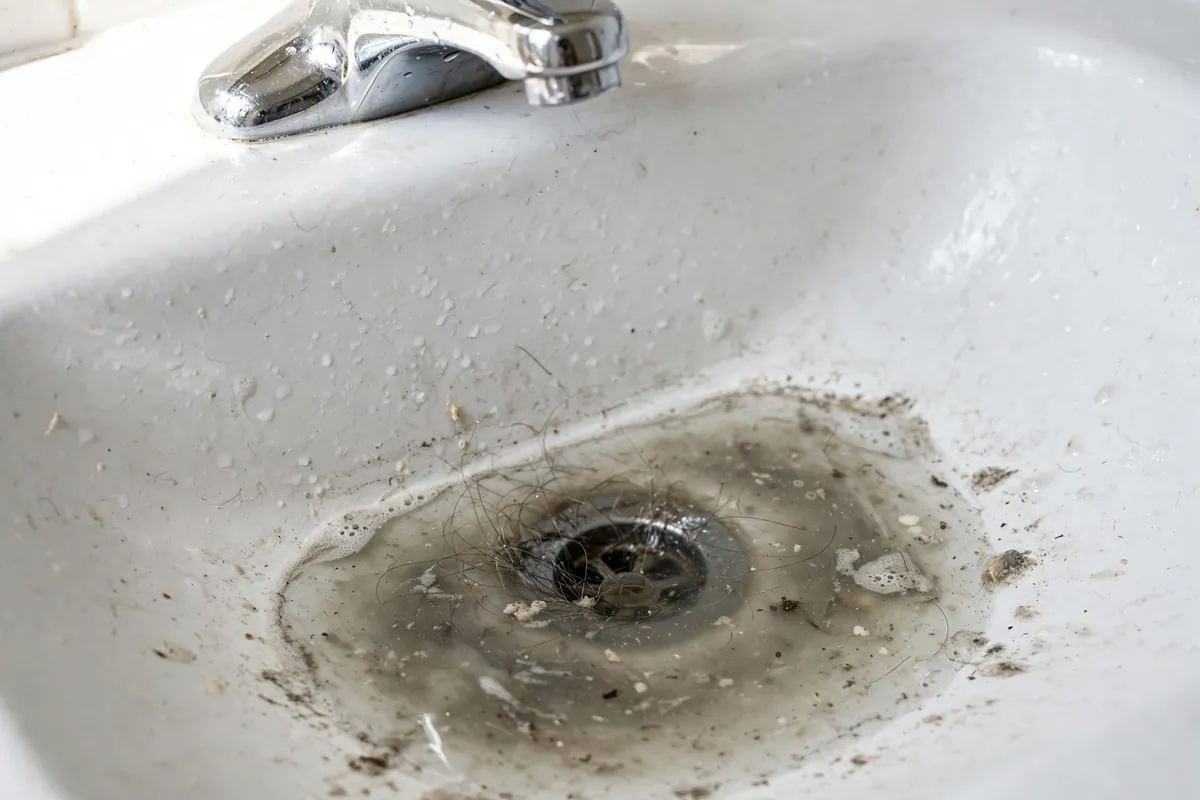
A clogged sink drain with slow-draining water pooling in the basin.
Key Takeaways
- A clog in one fixture is usually a local blockage. A clog in several fixtures at once usually means the main sewer line.
- Recurring clogs point to a narrowed or damaged pipe, not to bad luck. A camera inspection shows the cause.
- Hair, soap, grease and wipes cause most fixture clogs. Roots, scale and sagging pipe cause most main line clogs.
- A plunger is safe for a single clog. Chemical drain cleaner is not safe for any clog.
- If water is backing up into a tub or floor drain, stop using water and call. Do not flush again.
- Clearing a clog opens a path. Cleaning the pipe, or repairing it, is what stops the clog returning.
What a Clogged Drain Is Telling You
A clog is not one problem but several, and the behaviour of the drain usually gives the cause away. If a sink fills, swirls weakly and drains slowly, water is getting past a partial blockage. If it fills and stays full, the blockage is more complete. If a drain clears with a plunger and clogs again the next week, something inside the pipe is catching debris a little more with every use. And if a toilet clogs at the same time as a tub drains slowly or gurgles, the blockage is in a shared line rather than in the toilet at all. Each of those patterns has a different answer, which is why the first question a local professional asks is usually about the pattern, not the plunger.
The location of the clog decides the tool. A blockage in the trap under a sink, the U-shaped bend that holds water to block sewer gas, can often be cleared by removing and cleaning the trap, if that can be done safely. A blockage a few feet down a branch line needs a cable machine fed through the fixture or a cleanout. A blockage in the main sewer line, forty feet out under the front lawn, needs a longer cable, a camera to find it, and sometimes hydro jetting to clear the material around it. Guessing at the location wastes time and can damage a fixture, which is why the pattern of symptoms is the most useful information you can give when you call.
The material of the clog matters too. A soft clog made of hair and soap responds to a plunger or a small auger. A grease clog is hard and sticky, and a cable will poke a hole through it while the grease on the walls stays behind, so the drain clogs again quickly. A root clog is a living mat that has grown through a joint, and cutting it clears the pipe but leaves the joint open for the roots to return. A clog caused by a sagging or collapsed pipe is not a material problem at all: the pipe itself has lost its shape, and no amount of clearing will restore the flow. A camera inspection is the only way to tell these apart with confidence, and it is the step that separates a repair from a repeat visit.
Clogs by Fixture: What Each One Usually Means
| Fixture | Usual cause | First safe step | When to call |
|---|---|---|---|
| Kitchen sink | Grease hardening on the pipe walls, plus food particles. | Plunger with the overflow blocked; stop putting grease down the sink. | It clogs again within days, or both sides of a double sink are slow. |
| Bathroom sink | Hair, soap and toothpaste building up in the trap and drain. | Remove and clean the pop-up stopper; use a strainer. | Water drains slowly even after the stopper is clean. |
| Shower or tub | Hair and soap forming a dense plug in the drain. | Remove hair from the drain cover; use a strainer. | The tub fills while showering, or the drain gurgles. |
| Toilet | Too much paper, a foreign object, or a blockage further down the line. | Flange plunger with firm, steady plunges. | It clogs every week, or other fixtures are slow too. |
| Laundry drain | Lint, detergent residue and fabric fibres. | Check the drain hose and lint trap on the machine. | Water backs up from the standpipe when the machine drains. |
| Floor drain | Silt and debris, or a main line problem showing at the lowest drain. | Refill the trap with water if it has dried out. | Water or sewage comes up through the drain. Call promptly. |
Why Clogs Keep Coming Back
A clog that returns is the most useful clue a drain can give, because it means the pipe itself has a problem rather than the contents of the drain. The most common reason is that the pipe is narrowed. In an older cast-iron line, scale builds up on the inside walls over decades, and the opening in the middle shrinks until a normal flush of paper cannot pass cleanly. In a clay lateral, roots enter through a joint and grow into a mat that catches everything. In a kitchen line, grease coats the walls until the pipe is effectively a much smaller pipe. In each case, clearing the clog opens a hole through the narrowing, and the next thing that passes catches on the rough edges and blocks it again. The interval between clogs gets shorter each time, which is the sign that the pipe, not the clog, is the problem.
A second reason a clog returns is a change in the shape of the pipe. A section of sewer line can sag, forming a low spot where water and solids settle instead of flowing, and the settled material builds into a blockage that clearing cannot remove permanently. A pipe can also shift at a joint, creating a lip that catches paper and wipes. A cracked pipe lets soil into the line, and the soil builds into a dam. None of these can be seen from the surface, and none of them responds to a plunger or a cable in the long term. A camera inspection shows the sag, the offset joint or the crack, and the distance from the cleanout, so the repair can be planned instead of guessed at.
A third reason is a habit that has not changed. If wipes are still being flushed, if grease is still going down the kitchen sink, or if a shower still has no strainer, the same clog will form again no matter how well the pipe is cleaned. This is the easiest cause to fix, and also the one most often overlooked, because the habit feels harmless. One wipe does not block a drain. Many wipes, flushed over weeks, build into a mass that wraps around roots or catches at a joint. One pan of grease does not block a sink. Many pans, washed over months, coat the pipe until the opening is too small. Changing the habit is part of the repair, and a local professional can explain which habits matter for the particular drain in question.
The pattern of the recurrence also tells a story. A clog that returns in the same fixture, on the same schedule, points to that fixture's own drain or its branch line. A clog that moves from one fixture to another, or that appears in a different drain each time, points to the main line, where a partial blockage shifts with the flow. A clog that appears only after heavy rain points to the combined sewer system in Trenton's older sections, where stormwater raises the level in the shared pipes. A clog that appears only when the washing machine runs points to a laundry line that cannot handle the volume of water the machine discharges at once. Noting when the clog happens, and what was running at the time, is the detail that turns a vague complaint into a diagnosis.
Safe First Steps for a Clogged Drain
Work out how many fixtures are affected
Check the other sinks, tubs and toilets. One slow fixture is a local clog. Several slow fixtures together mean the main line, and the next step is to call rather than to keep plunging.
Use a plunger on a single clog
Use a cup plunger for a sink or tub and a flange plunger for a toilet. Keep the head covered with water, block the overflow with a damp cloth, and use firm, steady plunges. Stop if water starts rising toward the rim.
Clear what you can see
Remove hair from a shower drain cover and clean a pop-up sink stopper. Empty a drain strainer. These are the visible parts of the clog, and clearing them sometimes clears the drain.
Do not use chemical drain cleaner
Chemical drain cleaner can damage older pipes, can splash back and cause burns, rarely clears a real blockage, and creates a hazard for anyone who later opens the pipe. If the plunger does not clear it, call.
Stop using water if it backs up
If water is coming up through a tub, shower or floor drain, stop using all water, do not flush again, keep people and pets away from the water, and call for help.
Clogged Drain Repair in Trenton's Older Homes
Trenton's housing makes recurring clogs more common than in a newer city. About 74% of Trenton homes were built before 1960, according to American Community Survey data reported in 2023, and the sewer laterals under those homes are often as old as the houses themselves. Clay pipe, laid in short sections with mortar joints, gives roots dozens of entry points along a single run to the street. Cast iron, used inside the house and for the first section outside the foundation, corrodes from the inside and narrows over decades. Homes built from the 1940s into the early 1970s may have Orangeburg pipe, a fibre pipe made from wood pulp and pitch that softens and deforms under soil load as it ages. A clog in one of these homes is rarely just a clog. It is usually the first visible sign of a pipe that has been narrowing or weakening for years.
The neighbourhood matters too, because the era of the house and the size of the street trees go together. Chambersburg, with homes dating to the late nineteenth and early twentieth centuries, has both old clay laterals and mature trees. Hiltonia and the neighbourhoods around it have a similar mix. A house on a street with large maples or oaks over the sewer line is more likely to have root problems than a house on a newer street with small trees, and the roots are more likely to enter at the joints nearest the tree. That is why a camera inspection report that records the distance to each root entry is useful: it shows whether the roots are coming from one tree or from several, and whether the problem is in one joint or along the whole line.
Rental properties add another layer. A clog in a ground-floor unit can be the first sign of a shared main line problem, and a tenant's habits in one unit can block a drain that serves several. Landlords and property managers who call should note which units are affected, which floor each one is on, and whether the problem appears when a particular fixture is used elsewhere in the building. Those details help the local professional decide whether the cause is in one fixture, in a branch line serving several units, or in the main line serving the whole property.
When a Clogged Drain Needs a Professional
- The same drain clogs again within days or weeks of being cleared.
- More than one fixture is slow, gurgling or backing up at the same time.
- Water appears in a tub, shower or floor drain when another fixture is used.
- A plunger does not move the water at all, or the water level keeps rising.
- Sewage is involved, or a strong sewage smell has appeared.
- The drain has never been inspected and the house is several decades old.
- You suspect roots, a sagging pipe or a cracked lateral, or a previous cleaning did not last.
Call for Clogged Drain Repair in Trenton
Dealing with a clogged drain that will not stay clear in Trenton? Call now to describe the problem and connect with an independent local drain professional who can discuss the help available.
Trenton Drain Pros is a referral service connecting callers with an independent local service provider; the provider is responsible for diagnosis, pricing, scheduling, licensing and the work performed.
Frequently Asked Questions
Why does my drain clog again a week after it was cleared?
A drain that clogs again within days or weeks was probably cleared, not cleaned, or the pipe itself is narrowed or damaged. Roots, grease, scale or a sagging section of pipe catch debris again as soon as water flows. A camera inspection shows the cause inside the pipe, which is the step that stops the cycle.
Can a plunger damage a drain?
A plunger used with firm, steady pressure is safe for a single clog in a sink, tub or toilet. It can cause a problem if it is used violently on a toilet that is already overflowing, or if it is used on a drain that is backing up with sewage. If the water level keeps rising, stop plunging and call.
What causes a toilet to clog when other drains are fine?
A toilet that clogs on its own usually has a blockage in its own trap, an object caught in the trapway, or a weak flush that cannot clear the bowl. If other fixtures are also slow or gurgling, the blockage is more likely in a shared line or the main sewer line. Describe the pattern when you call so the right checks are made.
Are wipes really a problem if the packet says flushable?
Yes. Wipes sold as flushable are made from fibres that do not break apart in water the way toilet paper does. They snag on rough joints, root fibres and scale inside an old pipe, and over weeks they build into a mass that blocks the line. Only toilet paper and human waste should go down a toilet.
How do I stop my shower drain clogging with hair?
Use a mesh strainer over the drain and empty it after each shower. That catches most hair before it reaches the pipe. If the drain is already slow, remove hair from the drain cover and the visible part of the drain. If it stays slow, the blockage is further down the line and a cable machine is needed.
What should I do if my sink will not drain at all?
Stop running water into it, and do not use chemical drain cleaner. Try a plunger with the overflow blocked by a damp cloth. If the plunger does not move the water, or if other fixtures are also slow, call and describe the problem. A drain that will not move at all usually has a complete blockage that needs a cable machine.
Can a clogged drain cause a sewage smell in the house?
Yes. A clog can trap wastewater in a pipe, and a blocked vent can prevent air moving through the drain system, which lets sewer gas enter the home. A dry trap in a little-used drain can also cause a smell. Run water into little-used drains to refill the traps, and call if the smell stays after that.
Does a clogged drain always need a camera inspection?
No. A single clog in one fixture that clears with a plunger and stays clear does not need a camera. A camera inspection is the right step when a clog keeps returning, when several fixtures are affected, when the house is several decades old, or when a repair or replacement is being considered, because it shows the condition of the pipe.
Need Drain Cleaning Help? Call Now
Describe the drain problem and discuss the help available for your specific situation.