Drain Cleaning Services in Trenton, NJ
Drain cleaning removes the blockage from a drain or sewer pipe and restores the pipe so water flows through it properly again. It covers everything from a single slow sink to a main sewer line that serves the whole house, and the right answer depends on where the blockage sits, what it is made of, and what condition the pipe is in. This page explains what drain cleaning includes, how it is done, and what happens when you call for help in Trenton.
Drain and sewer assistance for homes, rentals, and local properties in Trenton, NJ.
Calls may be routed to an independent local service provider.
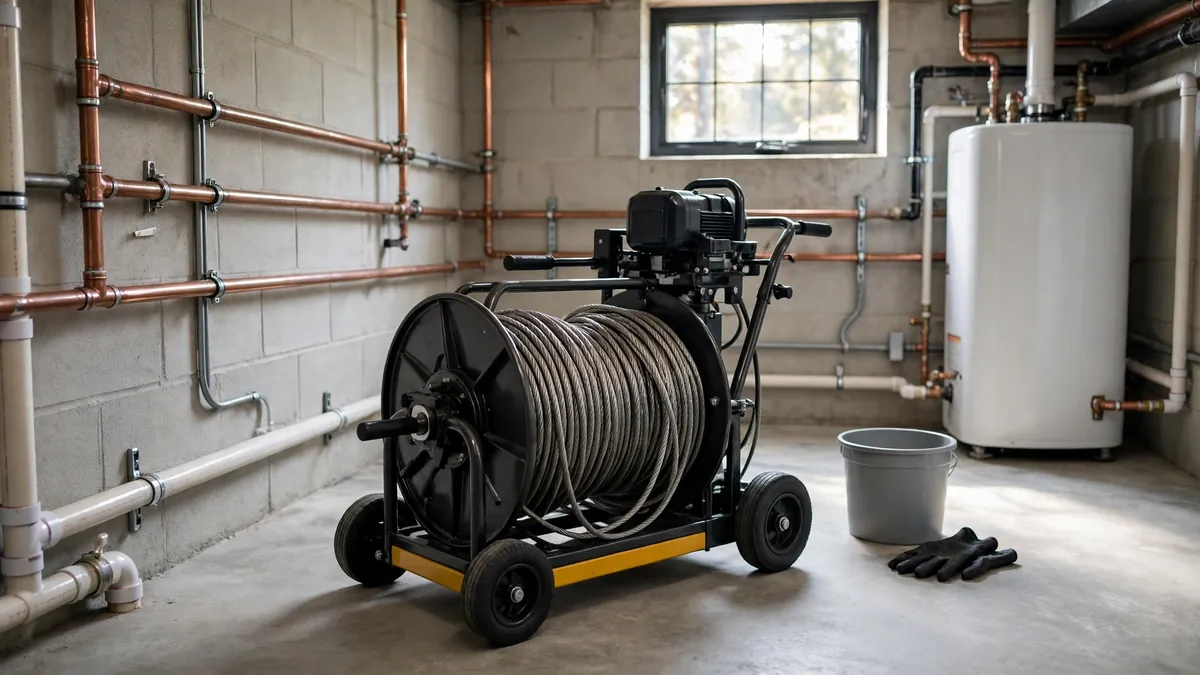
A drain auger machine with a coiled cable, ready for a drain cleaning job.
Key Takeaways
- Drain cleaning covers fixture drains, branch lines and the main sewer line from the house to the street.
- A cable machine breaks through a blockage. Hydro jetting scours the pipe walls. A camera shows which one the pipe needs.
- Grease, hair, soap, wipes, roots and scale are the most common causes of drain blockages in Trenton homes.
- One slow drain is usually a fixture problem. Several slow drains together usually mean the main line.
- A drain that clogs again within weeks was probably cleared, not cleaned, or the pipe itself is damaged.
- Do not use chemical drain cleaner. It can damage pipes and injure anyone who later opens the line.
What Drain Cleaning Covers
A home has several kinds of drains, and each one clogs in its own way. A kitchen sink drain collects grease, food particles and soap, and the grease cools and hardens on the pipe walls a little more with every wash. A bathroom sink and shower drain collect hair and soap, which combine into a dense plug that water cannot push through. A toilet drain carries the largest volume of water in the house in a single flush, so it is often the first fixture to show a problem further down the line. A laundry drain handles lint and detergent, and a floor drain in a basement or garage collects silt, dust and whatever washes across the floor. Drain cleaning covers all of these, and the first step in any visit is working out which drain is blocked and whether the blockage is in that fixture's own pipe or further down where several drains join.
Beyond the fixtures, drain cleaning covers the branch lines that join fixtures together and the main sewer line that carries everything out of the house. A branch line serves a bathroom group or a kitchen and laundry pair, so a blockage there affects two or three fixtures at once. The main line, also called the sewer lateral once it leaves the building, runs underground from the house to the public sewer main in the street, and a blockage there affects every fixture in the home. The distinction matters because the tool that clears a bathroom sink will not reach a blockage forty feet out under the front lawn, and the camera that inspects a main line is a different instrument from the one used inside a house. A local professional starts by asking which fixtures are affected, because the pattern of the symptoms usually narrows the location before any tool is used.
Drain cleaning also includes the work that stops a blockage returning. Cutting roots out of a line is one job; finding the joint they entered through is another, and the second one decides whether the roots will be back in a few months. Scouring grease out of a kitchen line is one job; explaining that grease belongs in the bin, not the sink, is the part that keeps the line open. Cleaning scale out of an old cast-iron pipe is one job; checking whether the pipe has thinned to the point where cleaning will not hold is another. The cleaning itself is the visible part of the visit. The inspection that goes with it, usually with a camera, is what turns a one-off clearing into a lasting fix.
Commercial drains are part of drain cleaning too, though they are covered in more detail on the industries page. A restaurant kitchen drain sees more grease in a week than a home kitchen sees in a year, and a grease trap that is not maintained will send that grease straight into the line. An office building, a school or a hotel has long horizontal runs where debris settles, and a property with many units has shared lines where one tenant's habits affect every unit downstream. The tools are the same, but the scale and the maintenance schedule are different, and a commercial property usually needs a planned cleaning routine rather than a single emergency visit.
Signs a Drain Needs Cleaning
- A sink, tub or shower drains slowly and the water level rises before it falls.
- A drain gurgles, bubbles or makes a sucking sound when water runs elsewhere in the house.
- A sewage or sour smell comes from a drain, even after the trap has been refilled with water.
- A toilet flushes weakly, needs a second flush, or the water level in the bowl rises and falls oddly.
- The same drain clogs again within days or weeks of being cleared.
- Water appears in a tub, shower or floor drain when a toilet is flushed or the washing machine runs.
- A floor drain backs up during heavy rain, or after a lot of water is used at once.
- Fruit flies or drain flies appear around a sink or floor drain that is not draining properly.
Common Causes of Clogged Drains
Grease is the most common cause of a kitchen drain blockage, and it is also the most preventable. Cooking fat poured down a sink is liquid while it is hot, so it flows easily into the pipe, and then it cools, hardens and sticks to the pipe wall. The next wash adds another thin layer, and the one after that adds another, until the opening in the middle of the pipe is a fraction of its original size. Food particles catch on the rough grease, and the drain slows a little more each week. A cable machine can poke a hole through the grease, but the grease on the walls is still there, so the drain clogs again quickly. Hydro jetting is the tool that actually removes grease, because high-pressure water scours the walls clean instead of just opening a channel.
Hair and soap are the equivalent problem in bathrooms. Hair does not dissolve, and it wraps around any rough spot in a drain, in the trap under a sink, or in the strainer of a shower. Soap adds a sticky coating that holds the hair together, and over time the mass grows into a plug that water cannot push through. A shower drain strainer catches most of it if it is emptied regularly, but many showers have no strainer, or the strainer is removed and never replaced. A bathroom sink has the same pattern on a smaller scale, with toothpaste and shaving residue adding to the mix. These are straightforward clogs to clear, but they return quickly if the strainer habit does not change.
Wipes are a newer cause and a growing one. Wipes sold as flushable are made from fibres that do not break apart in water the way toilet paper does, and they snag on rough joints, root fibres and scale inside an old pipe. One wipe usually passes. Many wipes, flushed over weeks, build into a mass that blocks the line completely, and that mass is often found wrapped around roots or caught at a joint where the pipe has shifted. The same applies to paper towels, cotton pads and other items that should never be flushed. The rule is simple: only toilet paper and human waste go down a toilet, and everything else goes in the bin. The what-not-to-flush guidance is covered in more detail on the problem pages planned for the site.
Tree roots, scale and pipe damage are the causes that sit deeper in the system and cannot be fixed by changing a habit. Roots enter older clay laterals through mortar joints and grow into a mat that catches everything passing through. Cast-iron pipe corrodes from the inside, and the scale that builds up narrows the pipe until a normal flush cannot pass. A section of pipe can also sag, a condition called a belly, where water and solids settle instead of flowing, and a cracked or collapsed section can let soil into the line. Each of these needs a camera to confirm, and each has a different answer: root cutting, jetting, lining or replacement. The tree roots page and the sewer line repair page explain each one in detail.
How a Professional Cleans a Drain
Work out where the blockage is
The professional asks which fixtures are affected, checks the drains at the fixtures, and locates the cleanout if there is one. The pattern of symptoms usually shows whether the blockage is in a fixture drain, a branch line or the main sewer line.
Choose the right tool
A hand auger or cable machine breaks through a blockage and cuts roots. Hydro jetting scours grease and scale from the pipe walls. A camera inspection is used when the cause is not obvious or the problem keeps returning.
Clear and clean the pipe
The blockage is broken through and the material is removed or flushed out of the line. With jetting, the inside of the pipe is washed clean along its full length, not just at the point of the blockage.
Check the result
Water is run through the fixtures to confirm the drain flows properly, and a camera is run through the line when the problem has recurred or a damaged pipe is suspected, so the condition of the pipe is known before the visit ends.
Drain Cleaning Methods Compared
| Method | What it does | Best for | Limits |
|---|---|---|---|
| Plunger | Pushes and pulls water to dislodge a soft blockage near the fixture. | A single clogged toilet, sink or tub. | Cannot reach a blockage further down the line. |
| Hand auger | A flexible cable with a small head, worked by hand through a fixture drain. | Hair and soap clogs in a sink or tub trap. | Short reach, and it only opens a path through the clog. |
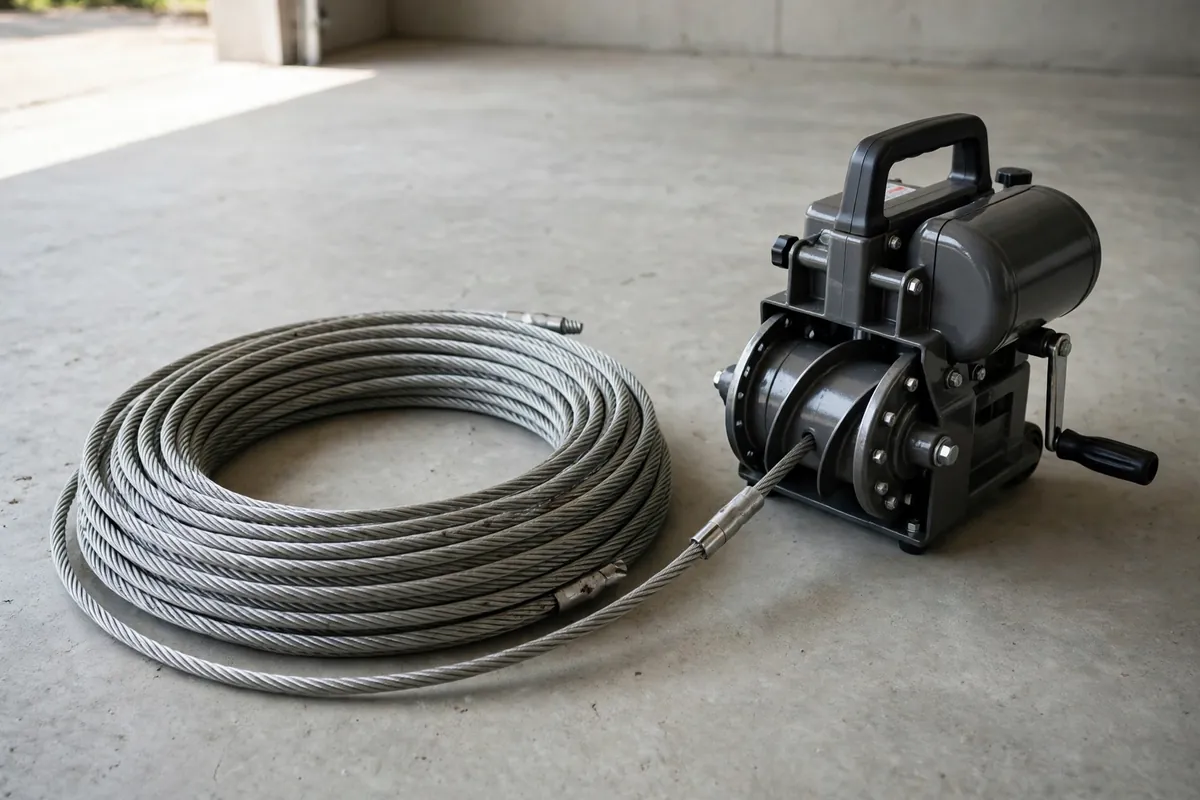
| Cable machine (snake) | A motorised rotating cable with a cutting head, fed through a cleanout or fixture. | Roots, solid blockages and main line clogs. | Opens a hole through the blockage but leaves buildup on the walls. |
| Hydro jetting | High-pressure water that scours the inside of the pipe along its length. | Grease, scale and heavy buildup; cleaning a line after roots are cut. | Not suitable for a pipe that is already collapsed or badly cracked. |
| Video camera inspection | A camera on a cable shows the inside of the pipe and the exact location of the problem. | Recurring clogs, suspected damage, pre-purchase checks, and confirming a repair. | It diagnoses; it does not clean or repair on its own. |
What You Can Do Safely Before Calling
For a single clogged sink or tub, a plunger is the right first step. Use a cup plunger, keep the head covered with water, block the overflow opening with a damp cloth so the pressure goes into the drain rather than out of the overflow, and use firm, steady plunges. For a toilet, use a flange plunger, which has an extra rubber flap that seals the bowl outlet. If the plunger moves the water and the drain clears, run hot water through the drain for a few minutes and watch whether it slows again. If it clears and stays clear, the clog was probably a soft, local blockage. If it slows again within days, the cause is deeper and a call is the next step.
A drain strainer is the simplest prevention there is. A mesh strainer in a shower or bathroom sink catches hair before it reaches the pipe, and emptying it after each shower takes a few seconds. In a kitchen, a sink strainer catches food particles, and wiping a greasy pan with a paper towel before washing it keeps most of the fat out of the drain altogether. Let cooking grease cool and put it in the bin rather than pouring it down the sink, and never put coffee grounds, rice, pasta or fibrous vegetables down a kitchen drain, even with a garbage disposal running. These are small habits, but they are the difference between a drain that is cleaned once and a drain that clogs every few months.
There are also things to avoid. Do not use chemical drain cleaner: it can damage older pipes, it can splash back and cause burns, it rarely clears a real blockage, and it creates a hazard for anyone who later opens the pipe to work on it. Do not keep plunging a toilet that is overflowing, and do not flush again when water is already rising in a bowl or a tub. Do not pour boiling water down a toilet, which can crack porcelain, and do not dismantle a trap or a pipe if you are not sure how it goes back together. If water is spreading onto flooring or sewage is involved, stop using water, keep people and pets away, and call.
Drain Cleaning in Trenton's Older Homes
Trenton's housing shapes the drain problems local professionals see most often. About 74% of Trenton homes were built before 1960, according to American Community Survey data reported in 2023, and many neighbourhoods, including Chambersburg, Hiltonia, North Trenton and South Trenton, were built out in the late nineteenth and early twentieth centuries. A sewer lateral in one of those homes is often as old as the house itself, laid when the house was built and never replaced since. Clay pipe was the usual material for much of that period, laid in short sections joined with mortar, and cast iron was common inside the house and for the section nearest the foundation. Homes built from the 1940s into the early 1970s may also have Orangeburg pipe, a fibre pipe made from wood pulp and pitch. Each material fails in its own way, and the era of the house is the first clue to what is underground.
The mature street trees in Trenton's older neighbourhoods are part of the same picture. A tree sends roots out in search of water, and a clay lateral with mortar joints is an easy target. A fine root enters through a hairline gap, finds a steady supply of water inside the pipe, and grows into a mat that catches paper, grease and everything else that passes. Root cutting clears the mat, but the joint is still open, so roots return unless the pipe is repaired or lined. That is why a drain that clogs every few months in a house with large trees nearby is usually a root problem rather than a habits problem, and why a camera inspection matters: it shows whether roots are entering through one joint or through many, which decides the right answer.
Trenton is also one of 21 New Jersey municipalities listed in the New Jersey Department of Environmental Protection's Combined Sewer Overflow program, which means that in older sections of the city the same underground pipes carry both wastewater from homes and stormwater from streets. In dry weather that works as intended. In heavy rain the combined flow can rise fast, and the lowest drains in a house, usually a basement floor drain, are the first place the pressure shows. A floor drain that backs up only when it rains is describing the combined system rather than a blockage in the house, and the long-term answer is different: a backwater valve or an overhead sewer arrangement, discussed with the local provider. The sewer backup page explains the first steps and the options.
How Often Should Drains Be Cleaned?
There is no single schedule that fits every home, because the right interval depends on the age of the pipes, the trees nearby, and how the drains are used. A newer home with plastic pipe and no large trees over the lateral may go years without needing a cleaning beyond a single clogged fixture. An older home with clay pipe and mature trees over the line may need the main line cleaned once a year, or every couple of years, to keep roots from building into a blockage. A restaurant kitchen, by contrast, may need its grease lines cleaned on a planned routine several times a year, because the volume of grease is so much higher than in a home.
The practical rule is to let the drains tell you. If a drain that was cleaned starts slowing again after a few months, the interval is too long, or the pipe has a problem that cleaning alone cannot fix. If a main line has been cleaned and a camera shows it in good condition, the next cleaning can wait until symptoms return. If a camera shows roots entering through several joints, a lining or repair may be a better use of the effort than another round of cutting. The local professional who has seen the inside of the line can discuss a sensible interval for that particular home, rather than a generic schedule. Call and describe the history of the problem, including how often it has happened and what was done last time, and that history will shape the advice.
Call for Drain Cleaning in Trenton
Need help with a clogged, slow or backed-up drain in Trenton? Call now to describe the problem and connect with an independent local drain professional who can discuss the help available.
Trenton Drain Pros is a referral service connecting callers with an independent local service provider; the provider is responsible for diagnosis, pricing, scheduling, licensing and the work performed.
Frequently Asked Questions
What does drain cleaning include?
Drain cleaning includes clearing and cleaning fixture drains, branch lines and the main sewer line, using a cable machine, hydro jetting or a combination of the two, and a camera inspection when the cause is not obvious or the problem keeps returning. The visit usually ends with water run through the fixtures to confirm the drain flows properly.
How is hydro jetting different from snaking a drain?
Snaking uses a rotating cable with a cutting head to break through a blockage and cut roots, which opens a path through the clog. Hydro jetting uses high-pressure water to scour the inside walls of the pipe along its length, removing grease, scale and debris. Snaking clears; jetting cleans. A camera inspection helps decide which one a particular pipe needs.
Can a drain be cleaned without digging?
Yes, in most cases. Drain cleaning is done through the fixtures or through a cleanout, which is a capped access pipe that gives direct entry to the sewer lateral. Digging is only needed when a pipe has to be repaired or replaced, and trenchless methods can often avoid even that. The trenchless sewer repair page explains the options.
Why does my kitchen drain keep clogging?
Kitchen drains usually clog because grease cools and hardens on the pipe walls, layer by layer, until the opening is narrow enough for food particles to catch and block it. A cable machine can open a hole through the grease, but hydro jetting is usually needed to scour the walls clean. Letting grease cool and putting it in the bin is the habit that prevents it returning.
How long does a drain cleaning visit take?
That depends on the problem. A single clogged fixture is usually a short visit, while a main sewer line with roots or heavy grease takes longer, and a visit that includes a camera inspection takes longer still. The local professional can discuss timing when you describe the problem and how many fixtures are affected.
What is a sewer cleanout and where is mine?
A cleanout is a capped access pipe that gives direct entry to the sewer lateral, usually outside near the foundation or sometimes in a basement. If you know where yours is, tell the professional when you call, because it makes the work faster. If you do not know, do not dig for it; the provider can locate the line when they arrive.
Do drains need cleaning even when they seem fine?
A drain that flows well does not need cleaning. The exception is a main line in an older home with known root problems or a commercial kitchen line, where a planned cleaning can prevent a blockage at an inconvenient time. For most homes, the right time to clean a drain is when it starts slowing, gurgling or clogging repeatedly.
What information should I have ready when I call about a drain?
Have the address, which drains are affected, what they are doing, when the problem started, whether it happens after rain or when another fixture is used, and whether it has happened before. Note the age of the house if you know it, and whether there are large trees near the sewer line.
Need Drain Cleaning Help? Call Now
Describe the drain problem and discuss the help available for your specific situation.