Sewer Backup in Trenton, NJ
A sewer backup is wastewater coming back into a home through a toilet, tub, shower or floor drain, instead of flowing out to the street. It is a sanitation problem, not just a plumbing inconvenience, and the first steps matter: stop using water, keep people and pets away from the water, and call for help. This page explains what to do first, why backups happen in Trenton, and the long-term options that can prevent the next one.
Drain and sewer assistance for homes, rentals, and local properties in Trenton, NJ.
Calls may be routed to an independent local service provider.
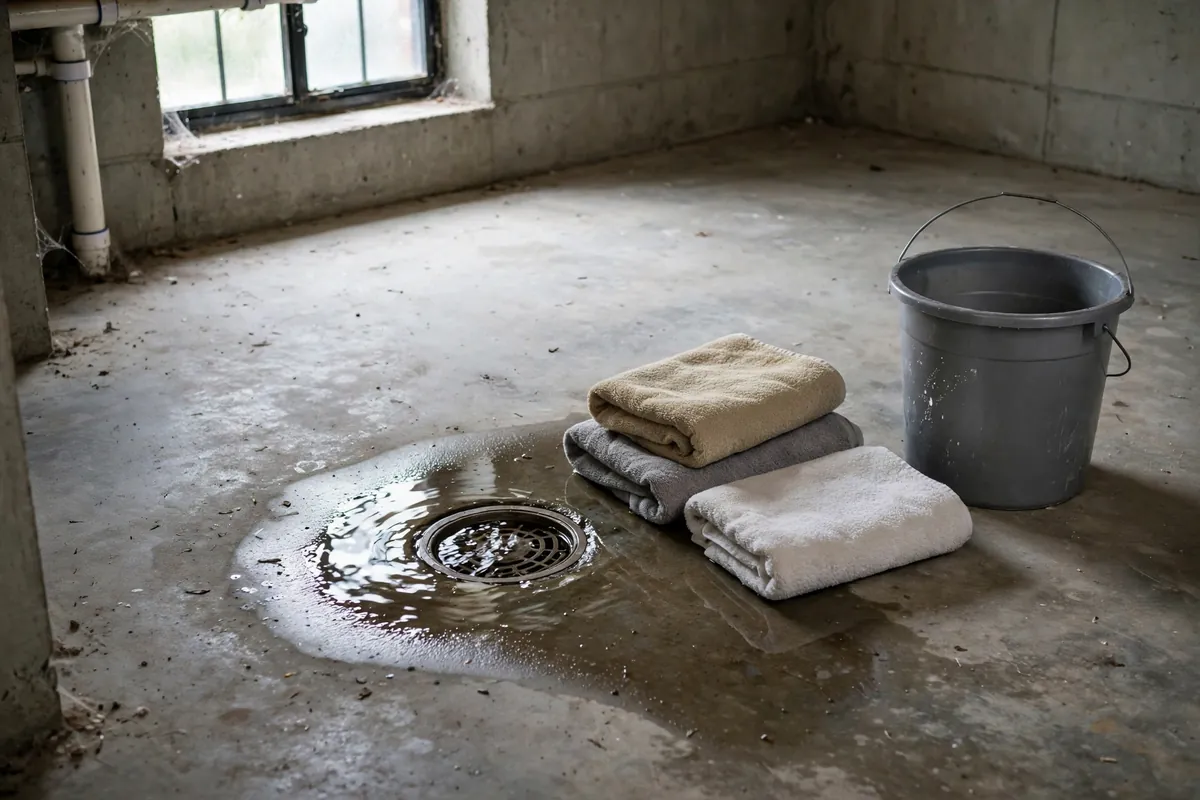
A basement floor drain with water backup, towels and a bucket nearby.
Key Takeaways
- Stop using all water when sewage backs up. Do not flush again, and keep people and pets away from the water.
- Do not use chemical drain cleaner in a backup. It can damage pipes and injure anyone who later opens the line.
- A backup in one home usually means a blockage in that home's lateral. A backup in several homes at once may mean the public main.
- In Trenton's older sections, heavy rain can back up the lowest drains because the sewers are combined.
- A backwater valve is the long-term protection against a backup from the street. Discuss it with the local provider.
- A camera inspection after a backup shows whether the line is damaged or was simply blocked.
What to Do First When Sewage Backs Up
Stop using all water
Stop using toilets, sinks, showers, the washing machine and the dishwasher. Every gallon that goes down a drain has nowhere to go, and it will come back through the lowest open drain in the house.
Do not flush again
If a toilet is already rising or a tub is filling, do not flush again in the hope that it clears. Flushing adds more water to a line that is already full, and it will push water further into the lowest drain.
Keep people and pets away from the water
Wastewater can carry bacteria and other contaminants. Keep people and pets away from it, and do not walk through it in bare feet. Do not try to clean it up with a household vacuum.
Do not use chemical drain cleaner
Chemical drain cleaner can damage older pipes, can splash back and cause burns, rarely clears a real blockage, and creates a hazard for anyone who later opens the pipe. Do not use it in a backup.
Note what happened and when
Note which fixtures backed up, whether it happened after heavy rain, whether other fixtures were running at the time, and whether neighbours on the same street have the same problem. That information helps the professional work out the cause.
Call for help
Call and describe the backup, including which drains are affected and whether sewage is involved. Say clearly that it is a backup, so the urgency is understood. The local professional can discuss what to do in the meantime.
Why Sewer Backups Happen in Trenton
A sewer backup happens when wastewater cannot flow out of a home to the street, and instead finds the lowest open drain and comes back through it. The most common cause is a blockage in the lateral, the underground pipe that runs from the building to the public sewer main. Roots, grease, scale, wipes and a cracked or collapsed pipe can all block a lateral, and when the line is full, the water has nowhere to go but back. The lowest drain in the house, usually a basement floor drain or a ground-floor tub, is the first place it appears, because water seeks the lowest point. That is why a backup often appears in a basement even when the blockage is outside under the front lawn.
A second cause is a blockage in the public sewer main. If several homes on the same street are backing up at the same time, the blockage may be in the main, and the municipality should be told first, because the main is the municipality's responsibility and a blockage there can affect many homes at once. A camera inspection with a locator is the evidence that settles the question: it shows whether the blockage is in the lateral or in the main, and how far it is from the building. The local professional can discuss what the camera shows and who should be contacted.
A third cause, specific to Trenton's older sections, is the combined sewer system. The city is one of 21 New Jersey municipalities in the New Jersey Department of Environmental Protection's Combined Sewer Overflow program, which means that in older sections the same underground pipes carry both wastewater from homes and stormwater from streets. In heavy rain the combined flow can rise fast, and the pressure in the system can push wastewater back through the lowest drains in a home, even when the lateral itself is not blocked. A backup that happens only when it rains, and that affects the basement floor drain first, is describing the combined system rather than a blockage in the house, and the long-term answer is different: a backwater valve, discussed below, rather than another round of drain clearing.
A fourth cause is a problem inside the house: a blocked vent, a dry trap, or a drain that cannot handle the volume of water being discharged at once. A blocked vent, usually on the roof, prevents air moving through the drain system, which can cause water to be siphoned out of traps and let sewer gas enter the home. A washing machine that discharges a large volume of water at once can overwhelm a laundry line that is partially blocked, and the water will back up through the standpipe or the nearest floor drain. These are less common than a lateral blockage, but they are worth checking when a backup happens in only one part of the house and the main line is clear.
Backups by Cause: How to Tell Them Apart
| Pattern | Likely cause | First step |
|---|---|---|
| One home backs up, neighbours are fine | A blockage in that home's lateral. | Stop using water and call. A camera inspection will confirm the cause. |
| Several homes on the same street back up | A blockage in the public sewer main. | Tell the municipality first, then call for help with the home. |
| Backup happens only after heavy rain | The combined sewer system is surcharging. | Stop using water and call. Ask about a backwater valve. |
| Backup happens when the washing machine runs | A laundry line that cannot handle the volume, or a partial blockage. | Stop the machine and call. Describe which fixture triggers it. |
| Backup in a basement floor drain only | The lowest drain is the first place a full line shows. | Stop using water and call. Do not use the basement drains. |
| Backup after a long dry period | A trap has dried out, or a blockage has built up slowly. | Run water into little-used drains. If the backup stays, call. |
Cleaning Up After a Sewer Backup
Cleaning up after a backup is a sanitation job, not a household cleaning job, and it should be approached with care. Wastewater can carry bacteria and other contaminants, and porous materials that have been soaked, such as carpet, padding, drywall and upholstered furniture, usually cannot be cleaned reliably and may need to be removed. Hard surfaces can be cleaned and disinfected, but only with protective gear: gloves, boots, eye protection and a mask, and with ventilation to the outside. A household vacuum should not be used, because it will spread contaminants through the air and through the machine itself. If the backup was large, or if it reached living areas, a professional cleanup service is the safer choice, and the local provider can discuss the options when you call.
The first step in cleanup is to stop the source, which is the same as the first step in the backup itself: stop using water, so no more wastewater enters the line. The second step is to remove standing water, with a pump or a wet vacuum designed for the purpose, and to open windows and run fans to dry the area, because dampness left in place will encourage mould and moisture problems in the floor and walls. The third step is to remove porous materials that have been soaked, and to clean and disinfect hard surfaces. The fourth step is to find the cause, with a camera inspection, so the backup does not happen again. Cleaning up without finding the cause is a temporary fix, and the next backup will follow the same path.
There is also a question to ask about insurance, and it is worth asking early. Many homeowner policies exclude sewer backup unless a specific addition, often called a sewer backup rider, has been added to the policy, and finding that out after a backup is a harsh lesson. The policy documents will say whether backup cover is included, and the insurer can confirm the position. This site does not give insurance advice, and the local provider is not an insurer, but it is worth knowing that the question exists, and that it should be asked before a backup rather than after one. Keep photographs of the damage and a record of the work done, because both are useful for any discussion with an insurer.
The most important part of the cleanup is the part that prevents the next backup. A camera inspection after a backup shows whether the line is damaged or was simply blocked, and it shows the exact location of the problem. If the cause was roots, the discussion is about cutting and lining or repair. If the cause was grease, the discussion is about jetting and habits. If the cause was a combined sewer surcharge, the discussion is about a backwater valve. Each of those is a different answer, and the camera is what separates them. The sewer line cleaning, tree roots and sewer line repair pages explain each one in detail.
Preventing the Next Sewer Backup
The long-term protection against a backup from the street is a backwater valve, a one-way valve installed in the sewer lateral that lets wastewater flow out of the house but closes when flow tries to come back in. It is installed in the lateral, usually in a basement or outside near the foundation, and it has an access cover so it can be inspected and cleaned. When the public sewer surcharges, the valve closes and prevents wastewater from entering the home. When the surcharge passes, the valve opens again and normal flow resumes. A backwater valve is the standard answer for a home in a combined sewer area whose lowest drain backs up when it rains, and it is worth discussing with the local provider if that pattern describes a Trenton home.
A backwater valve needs maintenance, and it is worth knowing that before one is installed. The valve has a flap that can be held open by debris, and it needs to be inspected and cleaned regularly, so that it closes when it is needed. It also means that while the valve is closed, wastewater from the house cannot leave, so using water during a surcharge will back up the house's own drains. That is a trade-off, and it is one the provider can explain: the valve protects the home from the street, but it does not protect the home from itself. An overhead sewer, where the basement fixtures are pumped up to a line above the street level, is the other long-term option, and it is a larger job that is usually discussed when a home is being renovated or when a backwater valve is not enough.
The habits that prevent a backup caused by a blockage are the same ones that keep a drain clear: only toilet paper and human waste go down a toilet, cooking grease goes in the bin once it has cooled, a drain strainer in every shower and bathroom sink catches hair before it reaches the pipe, and a garbage disposal is not a bin. A planned cleaning interval for an older home, with a camera inspection when the interval starts shrinking, is the other part of prevention. A main line that is cleaned once a year, or every couple of years, is less likely to back up than a line that is left until it blocks, and a camera report that records the condition of the line is worth keeping with the house papers, because it shows whether the line is getting better or worse over time.
Call for Sewer Backup Help in Trenton
Sewage backing up into your Trenton home right now? Stop using water and call now to describe the problem and connect with an independent local drain professional.
Trenton Drain Pros is a referral service connecting callers with an independent local service provider; the provider is responsible for diagnosis, pricing, scheduling, licensing and the work performed.
Frequently Asked Questions
What should I do first if sewage backs up into my home?
Stop using all water, including toilets, sinks, showers and the washing machine. Keep people and pets away from the water, do not flush again, and call for help. Do not use chemical drain cleaner, and do not try to clean up sewage with a household vacuum. Note which fixtures backed up and whether it happened after heavy rain.
Why does my basement floor drain back up when it rains?
In older sections of Trenton, the same underground pipes carry both wastewater and stormwater, because the city is one of 21 New Jersey municipalities in the state's Combined Sewer Overflow program. In heavy rain the combined flow can rise fast and push wastewater back through the lowest drains in a home. A backwater valve is the long-term protection against that kind of backup.
What is a backwater valve?
A backwater valve is a one-way valve installed in the sewer lateral that lets wastewater flow out of the house but closes when flow tries to come back in from the street. It protects a home against a backup from a surcharging public sewer. It needs regular inspection and cleaning so the flap closes when it is needed, and it should be discussed with the local provider.
Can I clean up sewage myself?
A small amount of wastewater on a hard floor can be cleaned with protective gear, including gloves, boots, eye protection and a mask, and with ventilation. Porous materials that have been soaked, such as carpet, padding and drywall, usually cannot be cleaned reliably and may need to be removed. A large backup, or one that reached living areas, is a job for a professional cleanup service.
Will a sump pump stop a sewer backup?
No. A sump pump handles groundwater under the house, not wastewater in the sewer line. A sewer backup needs a backwater valve or an overhead sewer arrangement, not a sump pump. The two systems do different jobs, and a sump pump will not prevent wastewater coming back through a floor drain.
How do I know if a backup is my problem or the city's?
If only your home is affected, the blockage is usually in your lateral. If several homes on the same street are backing up at the same time, the blockage may be in the public main, and the municipality should be told first. A camera inspection shows where the problem sits, which is the evidence that settles the question.
Does homeowner insurance cover a sewer backup?
Many homeowner policies exclude sewer backup unless a specific addition has been added to the policy. Check the policy documents and ask the insurer whether backup cover is included. Keep photographs of the damage and a record of the work done, because both are useful for any discussion with an insurer. This site does not give insurance advice.
How can I prevent a sewer backup in my Trenton home?
Keep the lateral clear by not flushing wipes, by putting grease in the bin, and by having the main line cleaned on a sensible interval for an older home. Have a camera inspection when the problem returns, so the cause is known. If backups happen after rain, discuss a backwater valve with the local provider, because that is the long-term protection for a home in a combined sewer area.
Need Drain Cleaning Help? Call Now
Describe the drain problem and discuss the help available for your specific situation.