Commercial Drain Cleaning in Trenton, NJ
Commercial drain problems are different from residential ones: the volume is higher, the lines are longer, the fixtures are shared, and a blocked drain can close a business or affect many tenants at once. Trenton Drain Pros connects businesses, property managers and institutions in Trenton, New Jersey, with an independent local drain professional who can assess the problem and discuss the help available. This page is the industries hub, and it explains the drain problems each industry faces.
Drain and sewer assistance for homes, rentals, and local properties in Trenton, NJ.
Calls may be routed to an independent local service provider.
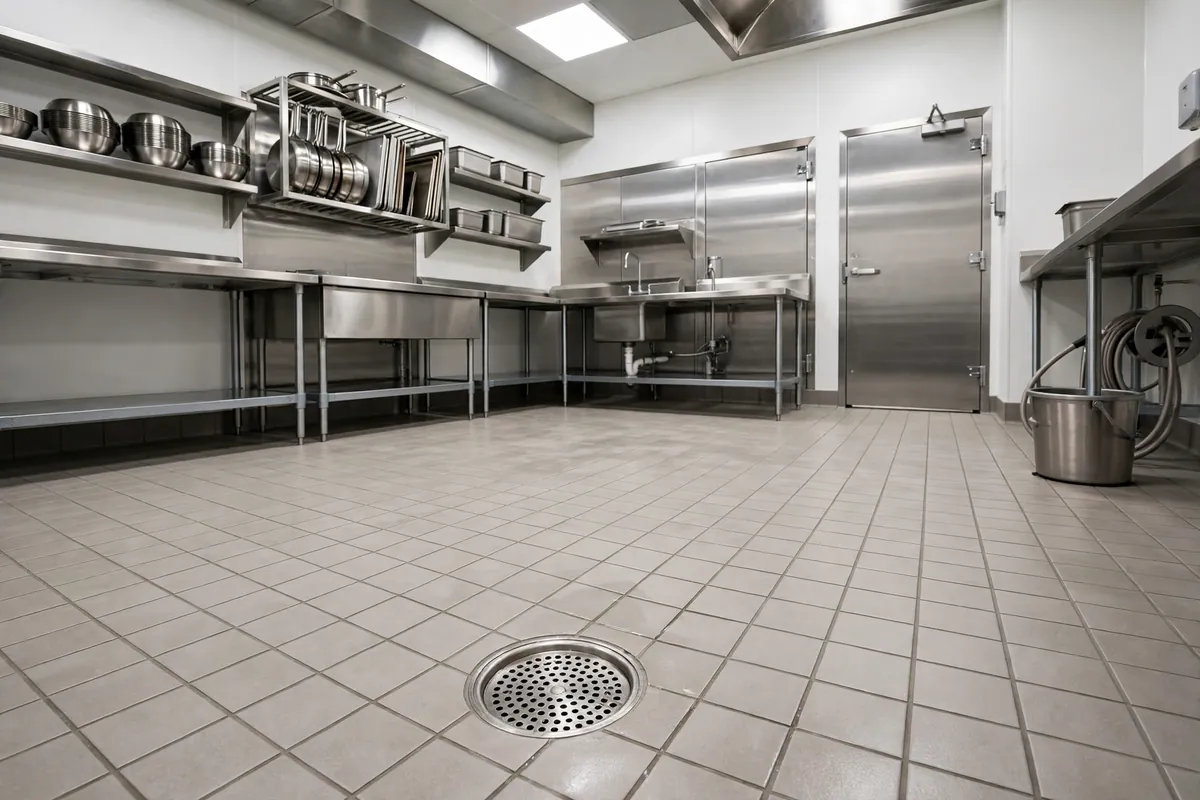
A clean commercial kitchen with a stainless steel floor drain.
Key Takeaways
- Commercial drains see far more volume than a home drain, so they need a planned cleaning routine, not just an emergency visit.
- A restaurant kitchen line sees more grease in a week than a home kitchen sees in a year.
- A blocked drain in a multi-unit building can affect many tenants, and the cause may be several units away.
- A grease trap that is not maintained will send grease straight into the line and block it.
- A camera inspection shows the condition of a commercial line and helps plan a maintenance routine.
- Trenton Drain Pros is a referral service. The independent local provider is responsible for diagnosis, pricing, scheduling, licensing and the work performed.
Industries We Serve in Trenton
Restaurants
Kitchen drains, grease traps and floor drains in Trenton restaurants, cafes and food businesses.
Learn More →Healthcare
Drains in clinics, care homes and medical offices, where a backup is a sanitation problem.
Learn More →Property Management
Shared main lines in multi-unit buildings, where one tenant's habits affect every unit.
Learn More →Warehouses
Floor drains, restroom drains and long runs in warehouses and industrial units.
Learn More →Restaurants and Food Businesses
A restaurant kitchen drain sees more grease in a week than a home kitchen sees in a year, and that volume shapes everything about the drain problem. Cooking fat, oil and food solids go down the kitchen sinks, into the grease trap, and from there into the line, and if the grease trap is not maintained, the grease passes straight through it and hardens on the pipe walls. The line narrows a little more each week, and the first sign is usually a kitchen sink that drains slowly during a busy service, or a floor drain that backs up when the dishwashers are running. A cable machine can open a hole through grease, but hydro jetting is the tool that scours the walls clean, and a restaurant line usually needs jetting on a planned routine, several times a year, rather than a single emergency visit when it blocks.
A grease trap is the first line of defence, and it needs to be understood as a piece of equipment, not a fit-and-forget device. It separates grease from wastewater, holding the grease in the trap while the water flows on, and it has to be emptied and cleaned regularly, or it fills up and stops working. A trap that is full sends grease straight into the line, and a trap that is never cleaned becomes a source of smells and a blockage in itself. The frequency depends on the volume of cooking: a busy restaurant with a fryer will fill a trap far faster than a cafe with a small kitchen. The local professional can discuss a sensible routine for the particular business, based on the volume of cooking and the size of the trap, and a camera inspection can show whether grease has already built up in the line beyond the trap.
Food businesses also have floor drains, which collect water from mopping, spills and washing down, and which are often the lowest drains in the building. A floor drain that backs up is a sanitation problem in a food business, because it can contaminate a kitchen floor, and it should be treated as urgent. The cause is usually a blockage in the shared line, often grease, and the fix is the same as for a kitchen sink: jetting to scour the line clean, and a planned routine to keep it clear. A restaurant that waits until a floor drain backs up during service has waited too long, and a routine that is planned around the business, rather than around the blockage, is the better answer.
Property Management and Multi-Unit Buildings
A multi-unit building has a shared drain system, and that changes the pattern of a drain problem. A clog in a ground-floor unit can be the first sign of a main line problem that affects the whole building, and a tenant's habits in one unit can block a drain that serves several. Wipes flushed in an upstairs apartment, grease poured down a kitchen sink on the second floor, or hair in a shower on the third floor all end up in the same shared lines, and the blockage usually appears at the lowest point, in a ground-floor unit that did nothing wrong. That is why a property manager who calls about a clog should note which units are affected, which floor each one is on, and whether the problem appears when a particular fixture is used elsewhere in the building.
The main line in a multi-unit building is also longer and busier than a single-family home's line, and it needs a planned cleaning routine. A camera inspection can show the condition of the shared lines, including roots, grease, scale and the material of the pipe, and it can help plan a routine that prevents a blockage affecting many tenants at once. A building with older clay laterals and mature trees over the line may need the main line cleaned once a year, or every couple of years, to keep roots from building into a blockage. A building with a restaurant or a food business on the ground floor will need its grease lines cleaned more often. The local professional can discuss a routine that fits the building, based on the camera findings and the history of the problem.
Landlords and property managers also have a responsibility question to answer, and it is worth knowing the shape of it. In the common pattern in New Jersey, the property owner is responsible for the lateral from the building to its connection with the public sewer main, and the municipality is responsible for the main itself, though the exact boundary varies by municipality. Inside the building, the owner is usually responsible for the shared lines, while a tenant is responsible for a clog in their own fixture caused by their own use. A camera inspection with a locator is the evidence that settles where a problem sits, and it is worth keeping the report with the building's records, because it answers the next question anyone asks about that line.
Hotels, Offices, Healthcare and Schools
A hotel has many fixtures feeding one line, and a drain problem in a hotel affects guests, not just the building. A guest room drain that is slow, a laundry drain that backs up when the machines are running, or a shared line that blocks during a busy weekend are all problems that need prompt attention, because they affect the experience of people who are paying to stay. The laundry is often the largest single source of water in a hotel, and a laundry drain that cannot handle the volume of water the machines discharge at once will back up through the standpipe or the nearest floor drain. A camera inspection can show whether the line is blocked or undersized, and a planned jetting routine can keep the shared lines clear.
An office building has a different pattern: long horizontal runs where debris settles, restroom drains that are used heavily at certain times of day, and a kitchenette drain that collects coffee grounds and food particles. A blockage in an office building often appears as a restroom that backs up during the morning peak, or a kitchenette sink that drains slowly all day. The fix is usually jetting to scour the long runs clean, and a routine that is planned around the building's use, rather than around the blockage. A school has a similar pattern, with restroom drains used heavily between classes, a kitchen drain that serves a cafeteria, and gym drains that collect silt and debris from showers and floors.
Healthcare buildings, clinics, care homes and medical offices, have a higher standard to meet, because a drain problem there is a sanitation problem with a direct effect on vulnerable people. A backup in a clinic or a care home should be treated as urgent, and the cleanup should be handled with care, because wastewater can carry contaminants. The drain system in a healthcare building also has to handle a higher volume of water and a wider range of waste, and it needs a planned routine that is discussed with the provider, based on the building and its use. The same applies to a school, where a backup in a restroom affects many children at once, and where the timing of the work matters, because it should be done when the building is not in use if possible.
Retail, Warehouses and Other Commercial Properties
A retail property, a shop, a mall unit or a supermarket, has restroom drains for customers and staff, and back-of-house drains for cleaning, deliveries and storage. A restroom drain that backs up in a retail property affects customers directly, and a back-of-house drain that blocks can affect deliveries and storage. The lines are often long and horizontal, with debris settling in the low sections, and jetting is the tool that scours those runs clean. A camera inspection can show whether the line is blocked or damaged, and a planned routine can keep it clear without disrupting trading hours.
A warehouse or industrial unit has floor drains that collect water from washing down, spills and rain entering through loading doors, and restroom drains for staff. The floor drains are often the lowest drains in the building, and they are the first place a blockage shows, because water seeks the lowest point. A warehouse line can also be affected by silt and debris from the yard, which settles in the line and builds into a blockage. Jetting flushes that settled material out, and a camera inspection shows whether the line is damaged or just dirty. The long runs in a warehouse mean that a blockage can be a long way from the fixture that shows it, and a locator used with the camera can mark the position of the problem on the surface, so the repair can be planned without digging up the whole floor.
Churches, community halls and other public buildings have a similar pattern to offices: restroom drains used heavily at certain times, a kitchen drain that serves a hall or a community kitchen, and long runs where debris settles. A backup in a hall during an event affects many people at once, and the timing of the work matters, because it should be done when the building is not in use if possible. The local professional can discuss a routine that fits the building and its use, and a camera inspection can show the condition of the lines before a routine is planned.
Commercial Drain Cleaning Compared With Residential
| Factor | Residential | Commercial |
|---|---|---|
| Volume | One household, a few fixtures. | Many fixtures, many users, high volume at peak times. |
| Grease | A home kitchen, a small amount each day. | A restaurant kitchen, a large amount every day. |
| Lines | Short runs, one main line. | Long horizontal runs, shared lines, many branches. |
| Impact of a blockage | One household affected. | Many tenants, guests or customers affected at once. |
| Routine | Clean when symptoms appear, or once a year for an older home. | A planned routine, discussed with the provider, based on volume and use. |
| Timing | A scheduled visit, or prompt attention for a backup. | Work planned around trading hours, guests or classes where possible. |
Call for Commercial Drain Help in Trenton
A drain problem in a Trenton restaurant, hotel, office, school or multi-unit building? Call now to describe the problem and connect with an independent local drain professional who can discuss the help available for your property.
Trenton Drain Pros is a referral service connecting callers with an independent local service provider; the provider is responsible for diagnosis, pricing, scheduling, licensing and the work performed.
Frequently Asked Questions
Can a restaurant get drain cleaning help in Trenton?
Yes. Restaurants, cafes and food businesses in Trenton can call for help with kitchen drains, grease traps and floor drains. A restaurant line usually needs hydro jetting on a planned routine, because the volume of grease is far higher than in a home. The local professional can discuss a routine that fits the volume of cooking and the size of the grease trap.
How often should a commercial drain be cleaned?
That depends on the business and the volume. A restaurant kitchen line may need jetting several times a year, while an office building may need its shared lines cleaned once a year or less. A camera inspection shows the condition of the line and helps plan a routine, rather than waiting for a blockage.
What should a property manager do about a clog affecting several units?
Note which units are affected, which floor each one is on, and whether the problem appears when a particular fixture is used elsewhere in the building. Those details help the local professional decide whether the cause is in one fixture, in a branch line serving several units, or in the main line serving the whole property. A camera inspection can confirm the cause.
Is drain help available for schools and healthcare buildings in Trenton?
Yes. Schools, clinics, care homes and medical offices in Trenton can call for drain help. A backup in a healthcare building or a school should be treated as urgent, because it affects vulnerable people or many children at once. The local professional can discuss a routine that fits the building and its use.
What is a grease trap and why does it matter?
A grease trap separates grease from wastewater, holding the grease in the trap while the water flows on. It has to be emptied and cleaned regularly, or it fills up and sends grease straight into the line, where it hardens and blocks the pipe. The frequency depends on the volume of cooking and the size of the trap.
Can drain work be done outside business hours?
The local professional can discuss timing when you call, including whether work can be planned around trading hours, guests or classes. A backup is treated as urgent whenever it happens, while a planned cleaning can usually be scheduled for a quieter time. Describe the business and its hours when you call.
Need Drain Cleaning Help? Call Now
Describe the drain problem and discuss the help available for your specific situation.